

Scientific Strategy
We decode metabolic communication between microbes and humans to understand health and disease and to develop new therapies.
Our goal is to translate mechanistic discoveries into new approaches for diagnosis, prevention, and treatment, and ultimately to bring microbiome-based precision medicine into clinical practice.
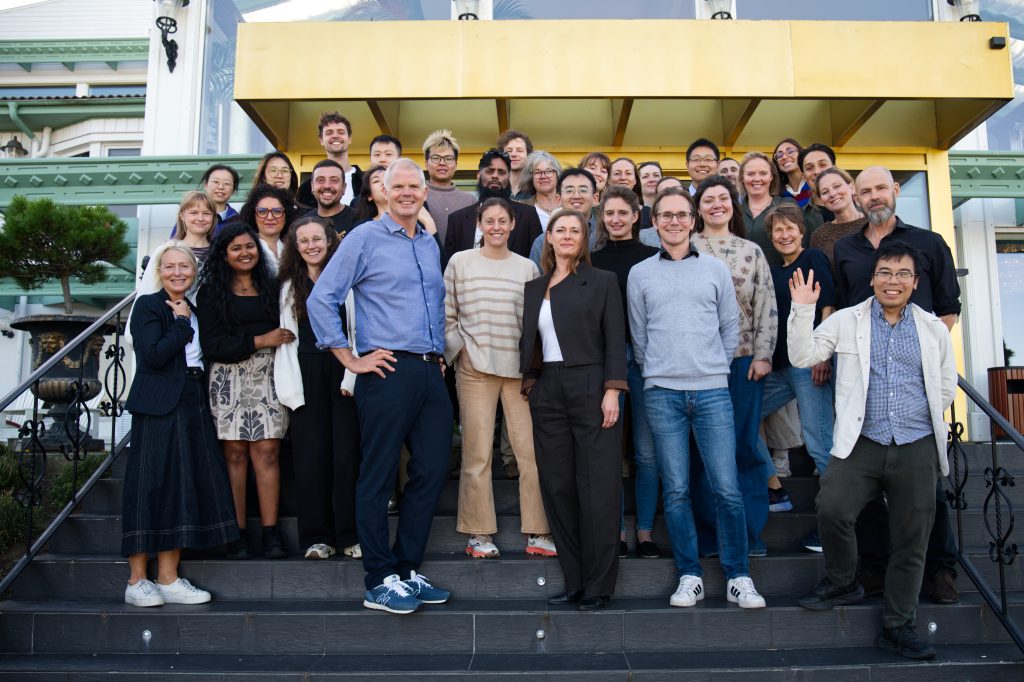
Our shared goal is to understand the biology of host–microbiota interactions and translate that knowledge into better human health.
Our Scientific Approach
The gut microbiota is metabolically active and produces small molecules that interact with the host. We study how these metabolites link diet and microbial metabolism to human physiology and disease.
Our focus is on mechanisms. Rather than asking only which microbes are associated with a particular phenotype or disease, we aim to determine how microbial functions and metabolites affect the host and establish causal relationships.
To do this, we study host–microbe interactions across biological scales, combining microbial ecology, microbiology, metabolism, systems biology, and clinical research. We investigate how microbial communities are shaped, how individual bacteria and microbial consortia function, and how their metabolites affect host physiology.
How We Work
We combine experimental and clinical research to study host–microbe interactions from microbial ecosystems to molecular mechanisms and human disease.
We investigate how diet, host physiology, and microbial interactions shape the gut microbiota. Using anaerobic cultivation, microbial genetics, bioreactor systems, metabolomics, and germ-free and gnotobiotic models, we study bacterial strains and microbial communities and determine how their metabolism affects host signalling and physiology.
We integrate these experimental studies with deeply phenotyped human cohorts, combining clinical data, imaging, metagenomics, metabolomics, proteomics, transcriptomics, and host genetics. This allows us to identify biological pathways, biomarkers, and potential therapeutic targets and to test them in dietary and microbiome-based intervention studies.
Findings from human studies guide experimental work, while mechanistic discoveries generate hypotheses that can be tested in humans.
Clinical Impact
We aim to understand how interactions between diet, the gut microbiota, and the host contribute to cardiometabolic and gastrointestinal diseases.
By identifying relevant microbial pathways, metabolites, and ecological mechanisms, we seek to develop biomarkers and new approaches to disease prevention, diagnosis, and treatment.
Our long-term goal is to translate discoveries from our laboratory into interventions that improve patient care.