

How does host–microbe communication influence cardiometabolic disease?
Changes in the gut microbiota are associated with obesity, type 2 diabetes, and cardiovascular disease. We investigate whether and how microbial functions contribute to these diseases.
We combine deeply phenotyped human cohorts and multi-omics with experimental studies to identify microbial metabolites and pathways associated with disease and test their effects on host physiology. Findings from human studies are tested experimentally, while mechanisms identified in experimental models are evaluated in patients.
One example is our work on imidazole propionate, a microbial metabolite associated with type 2 diabetes and cardiovascular disease. We showed that imidazole propionate can impair insulin signalling, providing a molecular link between microbial metabolism and host metabolic regulation.
We now investigate how microbial metabolites, metabolic pathways, and microbial ecology affect disease progression, treatment response, and clinical outcomes. By integrating microbiome and metabolomics data with clinical phenotyping and imaging, we aim to identify mechanisms that help explain differences in cardiometabolic disease between individuals.
Our goal is to use these mechanisms to develop better biomarkers and identify new approaches to the prevention and treatment of cardiometabolic disease.
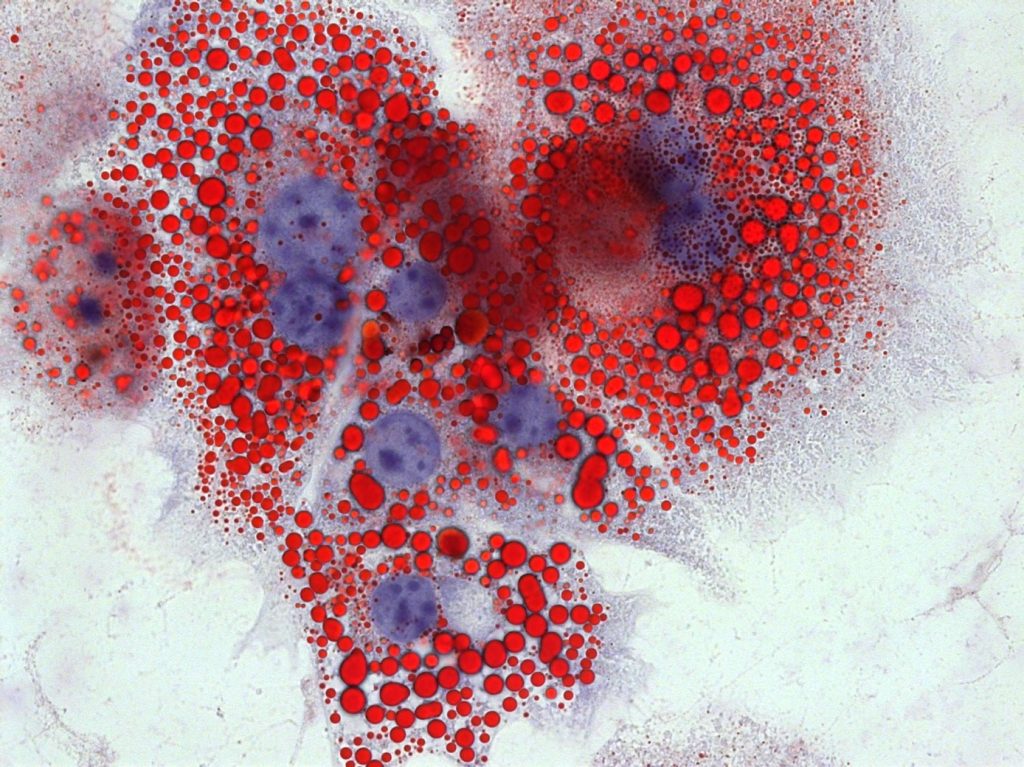
We investigate how gut microbial metabolism shapes cardiometabolic health and disease. This is an image of a heart-shaped liver cell with fat storage.